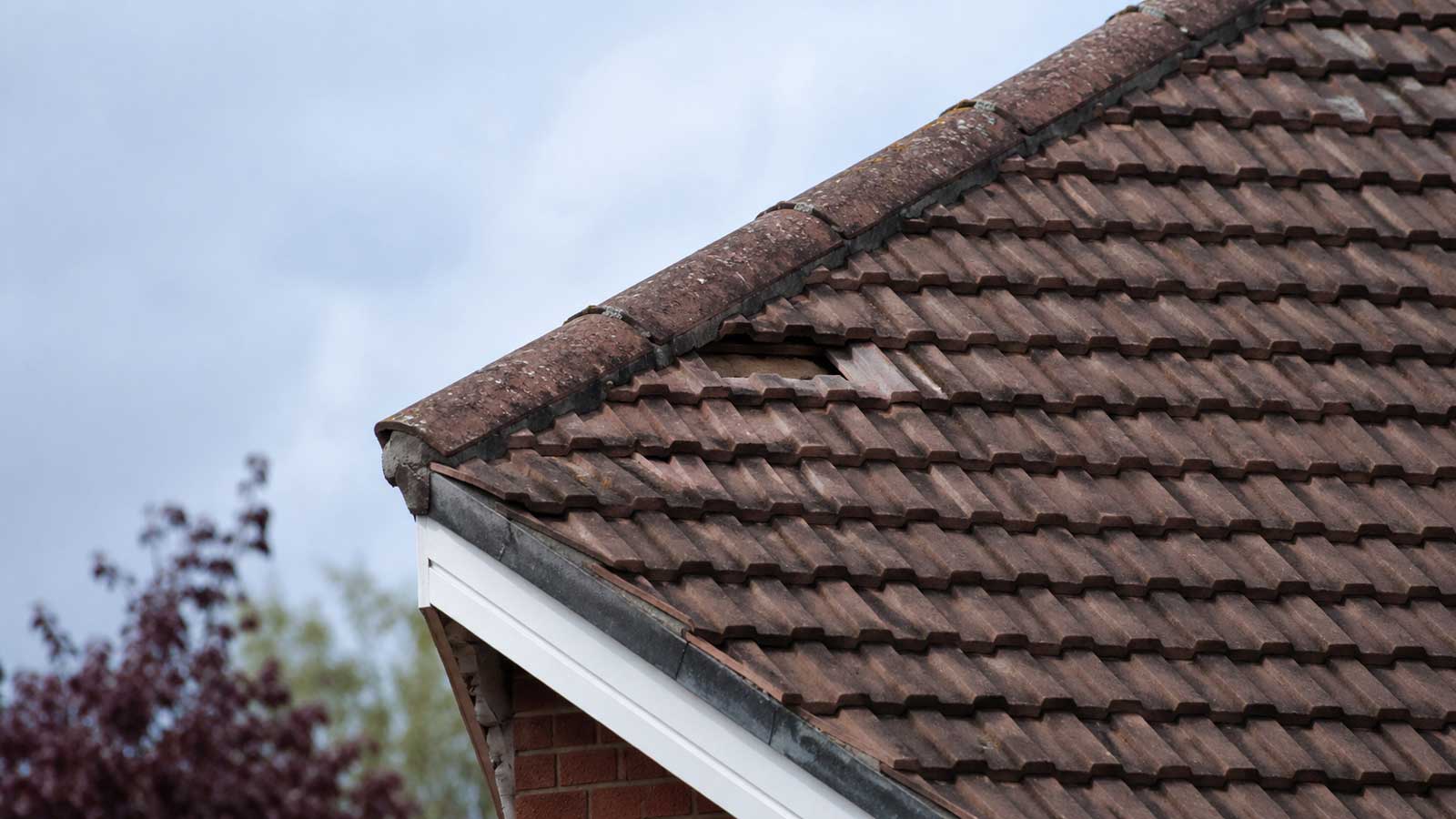
One piece out of place
A slate or tile can move after wind, impact or failure of its fixing. If the surrounding roof is secure, the repair may be very local. The replacement needs to match the size, thickness and fixing arrangement closely enough to sit properly with its neighbours.
Repeated slipping
Old slate roofs can begin to lose nails across a wider area. You may see hooks or clips from earlier repairs. That does not mean the roof must be stripped, though regular new slips from different parts of the slope deserve a broader fixing check.
On interlocking tiles, broken nibs or failed clips can produce a similar pattern of movement.
Do not force a near match
A tile that looks close from the pavement may have a different profile or interlock. Forcing it into the course can lift neighbouring tiles and create a new opening. Natural slates also vary in thickness. A thick replacement can make the course stand proud.
After strong wind
Look at both roof slopes from safe ground and check gutters and the garden for fallen pieces. A slate can drop out without leaving a dramatic hole from street level. If you see several disturbed areas, arrange inspection before more weather gets underneath the covering.